The session you are about to do was decided last night. Not by your programme, not by your coach, but by seven to nine hours you either protected or did not.
Most people treat sleep as what happens after the work. At eleVate we treat it as the work. Everything else in the building (the floor, the heat, the cold, the data) only functions on top of it.
What actually happens when you sleep
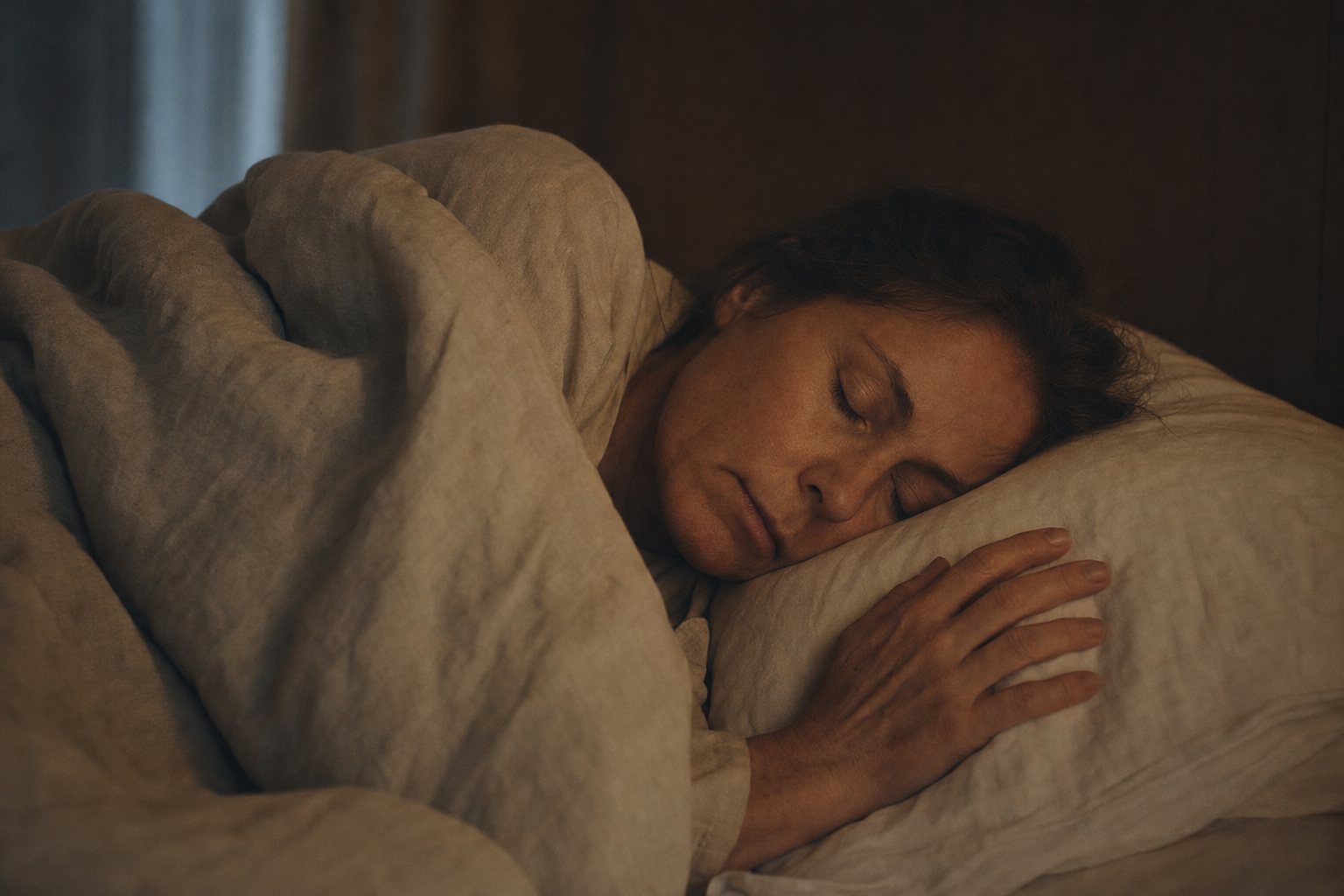
Sleep is not rest. It is the only period in which the body runs its repair cycle without competition.
- Growth hormone peaks in the first deep-sleep cycle of the night. Cut the first two hours short and you cut the peak.
- Muscle protein synthesis continues through the night, provided the raw material was there at dinner.
- Glucose regulation degrades after a single short night. One week at five hours shifts a healthy adult toward a pre-diabetic insulin response.
- Testosterone in men drops measurably after five days of restricted sleep, roughly the decline of ten years of ageing.
- Reaction time, decision quality and pain tolerance all fall before you notice they have.
None of this is marginal. A member training four times a week on six hours of sleep is paying full price for roughly two-thirds of the adaptation.
The hierarchy
We ask members to think in this order:
- Sleep
- Nutrition
- Training
- Recovery modalities
Not because training matters least, but because each layer depends on the one above it. Cold plunges and infrared do not compensate for a 1am bedtime. They amplify a good night; they cannot replace one.
The protocol
No supplements, no devices. Five things that work.
Fix the wake time. Same time every day, including weekends. The body sets its clock from waking, not from going to bed. This is the single highest-leverage change most members can make.
Light in the morning, dark at night. Ten minutes of outdoor light within an hour of waking anchors the circadian rhythm. After 9pm, lights down, screens dimmed. The eye reads brightness as daytime.
Caffeine stops by 2pm. Half of a 2pm espresso is still in your system at 8pm. The quarter that remains at midnight is enough to fragment deep sleep without waking you.
Train before 7pm. Hard training raises core temperature and cortisol for several hours. Evening sessions are better than none, but the recovery window is shorter and the sleep is lighter.
Cool the room. 17 to 19°C. The body needs to drop its core temperature by about one degree to initiate sleep. A warm bedroom is the most common and most ignored sleep problem in Amsterdam.
What we measure
Members on a coaching programme track three sleep markers, nothing more:
| Marker | Target | Why it matters |
|---|---|---|
| Duration | 7 to 9 hours in bed, 85%+ asleep | Below seven, adaptation falls faster than performance: you feel fine while losing ground |
| Consistency | Wake time within ±30 min, 6 of 7 days | Variability does more damage than a single short night |
| Resting heart rate | Stable or trending down | A rise of 5+ bpm over your baseline is the earliest reliable sign of under-recovery or illness |
We do not chase sleep scores. A wearable number that moves you to anxiety at 7am is doing the opposite of its job.
The one thing
If you change nothing else this month: pick a wake time and keep it for thirty days. Everything in this building gets easier.